Choosing a Reliable General Contractor in Sherman Oaks Made Easy
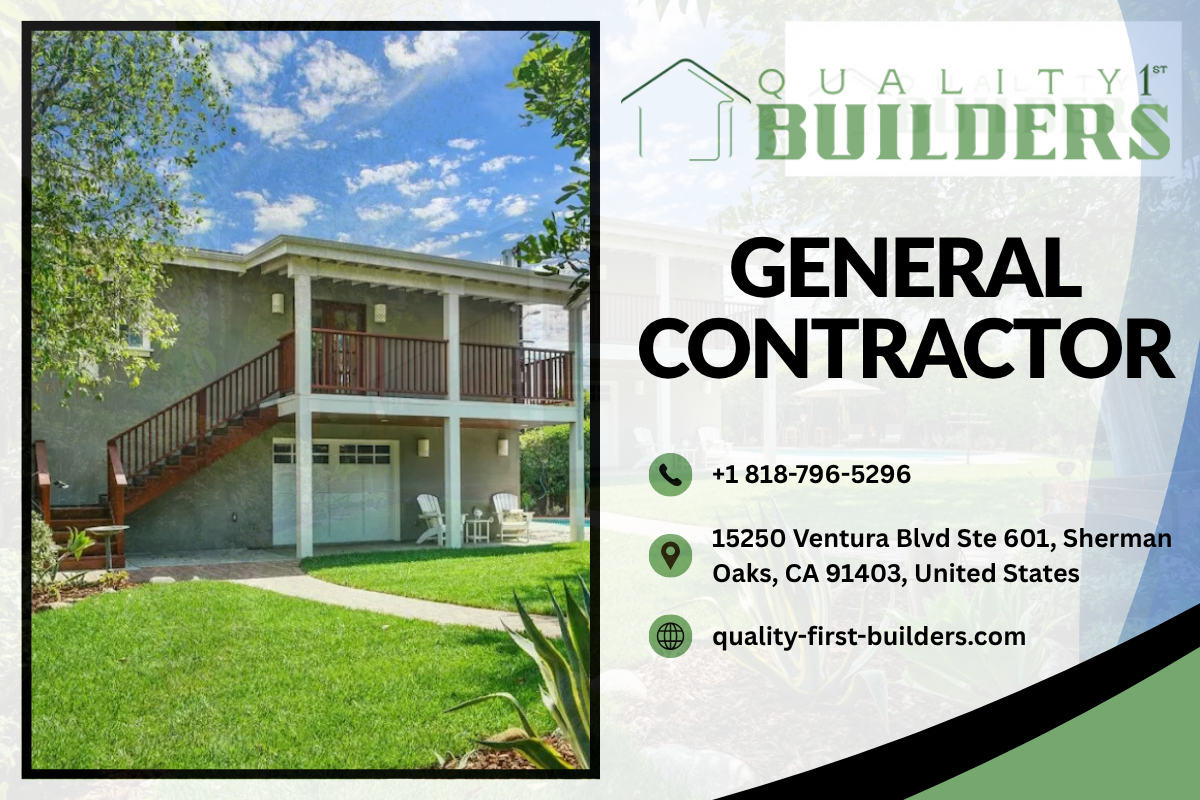


Finding the right general contractor can feel harder than choosing the actual finishes for your project. Most homeowners in Sherman Oaks begin with excitement, a folder full of inspiration photos, and a rough budget in mind. Then the practical questions show up fast. Who can actually build this well? Who will return calls, keep the site moving, and protect your budget when surprises appear behind the walls?
Those questions matter because construction is not a simple retail purchase. You are not buying a finished object off a shelf. You are hiring a team to make hundreds of decisions in real time, inside your home, often over several months. In neighborhoods like Sherman Oaks, where properties range from older ranch homes to substantial hillside houses and new luxury builds, the contractor you choose can shape the outcome far more than any tile or fixture ever will.
A reliable general contractor in Sherman Oaks does more than coordinate labor. That contractor interprets plans, sequences trades, handles permits, manages inspections, communicates setbacks, and solves problems before they become expensive. If you are planning home remodeling, a room addition, a kitchen overhaul, or a ground-up project with custom home builders, getting this choice right is the difference between a project that feels controlled and one that spirals.
Why Sherman Oaks projects require careful vetting
Sherman Oaks is not a one-size-fits-all market. Some homes sit on large lots with straightforward access. Others are tucked into hillside streets where parking, staging, and hauling become logistical challenges. Plenty of houses were built decades ago, which means hidden issues are common. Old plumbing lines, undersized electrical panels, unpermitted past work, foundation movement, and framing that does not match modern expectations can all affect cost and timeline.
That is one reason home remodeling Sherman Oaks projects need a contractor who knows the local building environment, not just someone with a slick website. Local familiarity helps with permit procedures, inspector expectations, trade relationships, and the practical realities of working in a dense residential area. A contractor who regularly works in Sherman Oaks is less likely to be surprised by access limitations, neighbor concerns, or the amount of time required for city approvals and revisions.
I have seen homeowners choose a contractor based mainly on a low estimate, only to discover that the person bidding the job had limited experience with older Valley homes. The result was predictable. The walls opened, framing corrections were needed, electrical upgrades became unavoidable, and the cheap bid stopped looking cheap. The issue was not bad luck. The issue was poor vetting at the start.
The difference between a bid and a real project plan
Many homeowners compare bids as if they are comparing identical products. They rarely are. One contractor may include demolition, debris hauling, permit handling, temporary protection, upgraded rough-ins, and finish installation. Another may leave several of those items vague, either intentionally or because the estimator did not think deeply through the scope.
That is why the best contractor is not always the one with the lowest number, or even the highest. It is usually the one whose proposal clearly reflects the work required. Good estimates show thought. They acknowledge uncertainty where uncertainty exists. They call out allowances when final selections have not been made. They explain exclusions instead of hiding them.
A reliable general contractor should be comfortable walking you through the estimate line by line. If the response is defensive, rushed, or evasive, pay attention. During construction, communication typically gets harder, not easier. If someone cannot explain the budget before the contract is signed, they are unlikely to become more transparent once the job begins.
What reliability actually looks like on a remodeling job
Reliability is often confused with friendliness. A pleasant personality helps, but it is not enough. In construction, reliability is visible in habits and systems. Does the contractor follow up when promised? Does the proposal match the drawings? Are allowances realistic for the quality level you want? Are change orders documented? Is the schedule specific enough to be meaningful? Are subcontractors organized, insured, and accountable?
On a kitchen remodel, for example, reliability shows up long before cabinets are installed. It shows up when the contractor verifies lead times, checks the framing before the cabinet order is finalized, confirms appliance specs, and catches a venting conflict before drywall goes up. It shows up when the site is protected so adjacent floors are not ruined by debris and traffic. It shows up when the homeowner hears about a delay early, not after a crew fails to arrive for three days.
This is especially important in home remodeling, where the unknowns are often built into the project. In a new custom build, the structure starts from a clear set of plans and approvals. In a remodel, the contractor may be discovering conditions as the work progresses. That calls for judgment, not just labor scheduling.
Start with fit, not just availability
Some homeowners begin their search by asking who can start immediately. That instinct is understandable, but it can backfire. Strong contractors are often booked in advance, especially reputable custom home builders Sherman Oaks residents use repeatedly. Immediate availability is not always a red flag, but it should prompt more questions. Did another project fall through, or is the contractor struggling to keep work coming in?
Fit matters more than speed. A contractor who mainly handles cosmetic refreshes may not be right for a major structural renovation. A firm known for new luxury homes may be excellent, but not always the best value for a modest bathroom and kitchen update. The right match depends on project size, complexity, design level, and how much hand-holding you need during selections and decisions.
When I advise homeowners, I usually tell them to narrow the field based on project similarity. If you are planning a substantial addition and reconfiguration, ask to see comparable work. If you are interviewing custom home builders, ask about projects with a similar square footage, lot condition, and finish expectation. A contractor can be competent and still be the wrong fit for your specific job.
Questions worth asking before you sign anything
The strongest interviews sound less like an interrogation and more like a working conversation. You want to understand how the contractor thinks, not just collect rehearsed answers. Short, direct questions usually reveal the most.
Here are five that consistently separate experienced professionals from smooth talkers:
- How do you handle scope items that are not fully defined at bidding?
- Who will supervise the job day to day, and how often will that person be on site?
- How do you document changes in price and schedule once work is underway?
- What assumptions did you make when preparing this estimate?
- What part of this project concerns you most, and why?
That last question often produces the most honest answer. A seasoned general contractor in Sherman Oaks might mention aging drain lines, limited access for deliveries, or likely electrical upgrades. Those answers are useful because they show foresight. A contractor who claims the project looks easy without caveats may be underestimating the https://penzu.com/p/781b43e190a577c8 work or trying too hard to win you over.
Licensing, insurance, and paperwork are not formalities
Every homeowner should verify licensing and insurance before moving forward. That sounds basic, yet people still skip it, especially when a contractor comes recommended by a friend or neighbor. Personal referrals are helpful, but they are not a substitute for documentation.
Licensing confirms that the contractor meets state requirements to perform the work legally. Insurance matters because construction sites create real risk. If a worker is injured or property is damaged, you want to know the contractor carries the proper coverage. For larger projects, it is also reasonable to ask whether key subcontractors are insured and whether permits will be pulled in the contractor’s legal business name.
Read the contract carefully. It should describe the scope, payment schedule, allowance structure, change order process, rough timeline, and responsibility for permits, materials, and cleanup. Payment schedules should correspond to progress, not front-load too much cash before substantial work is completed. If a contractor requests an unusually large deposit or pressures you to bypass permits, walk away.
This is where professionalism becomes visible. Strong builders do not act annoyed when you review paperwork. They expect it. In fact, the best ones often appreciate a client who pays attention, because it reduces disputes later.
References are useful, but only if you ask the right things
Many homeowners ask for references and then waste the opportunity by asking generic questions. Almost any contractor can produce a few satisfied clients. The value is in how deeply you probe.
Ask former clients what changed during the project and how the contractor handled it. Ask whether the final cost landed close to the approved estimate, not the original conceptual number. Ask how communication worked when there was bad news. Ask whether the site stayed reasonably organized. Ask whether the contractor finished punch list items promptly or became difficult once most of the money had been paid.
Try to speak with a recent client, a current client, and one whose job finished at least a year ago. The long-view reference is especially helpful. Some work looks great at handoff and reveals quality issues later. A bathroom that starts showing movement in the tile or a deck that drains poorly after the first rainy season tells you something important about the builder’s standards.
If possible, see a completed project in person. Photos can flatter almost anything. Walking a finished home tells a different story. Check reveals around doors, transitions between materials, paint consistency, cabinet alignment, and the general feel of care. Even homeowners with no construction background can sense when a job was done with discipline.
The pricing trap that catches many homeowners
The most expensive mistakes often begin with a bid that feels like a bargain. This happens in two ways. Sometimes the estimate is genuinely incomplete. Other times, the contractor intentionally underbids and plans to recover margin later through change orders, substitutions, or schedule pressure.
A fair proposal typically lands in the middle of a cluster if multiple contractors are bidding the same well-defined scope. When one number comes in dramatically lower, there is usually a reason. Maybe a finish level was misunderstood. Maybe the contractor assumed no structural modifications. Maybe supervision costs were left out. Maybe the number is simply a hook.
This does not mean you should automatically hire the highest bidder either. High pricing without corresponding detail can be just as problematic. The goal is to understand the story behind each proposal. Why is one price different? What assumptions are built into it? What was excluded? What is an allowance and what is fixed?
For home remodeling Sherman Oaks projects, pricing can also shift based on access, parking, and staging. A contractor who has actually worked in the neighborhood may price these factors more accurately than someone coming in from a different market. That local realism often saves money later, even if it makes the initial estimate look slightly higher.
How a strong contractor manages the messy middle
Most projects start well. The real test begins once demolition is complete and the hidden conditions reveal themselves. This is the phase when unreliable contractors stall, blame, disappear, or start improvising without documentation.
The messy middle is where project management matters. Say a kitchen renovation uncovers water damage around a window and outdated wiring in two adjacent walls. A good contractor will pause the affected scope, explain the issue in plain language, document the fix, provide a cost and time impact, and sequence the next steps so the entire job does not drift unnecessarily. A weak one may simply tell the crew to keep going, then present a surprise bill later.
Communication is part of craft. Homeowners often focus on visible finishes, but clear communication is one of the most valuable services a contractor provides. Good builders know when to call, when to email, when to issue a formal change order, and when a quick site meeting will prevent three future misunderstandings.
This is one reason many experienced clients prefer a general contractor with an established office process, even for mid-size projects. Not because they want bureaucracy, but because construction needs a paper trail. Memory is unreliable, especially when dozens of decisions stack up over months.
Red flags that deserve serious attention
Not every concern means you should walk away, but some patterns rarely improve after a contract is signed.
- The bid is unusually low and the scope description is vague.
- The contractor avoids permit discussions or suggests doing major work off the books.
- Calls and emails are inconsistent during the sales process.
- References sound lukewarm or mention billing surprises.
- The contract lacks detail on change orders, allowances, or payment stages.
I would add one more caution from experience, even though it does not always show up immediately. Be wary of anyone who promises certainty where certainty does not exist. Older homes especially come with unknowns. Trust the contractor who explains risk honestly over the one who guarantees a flawless path.
Remodeler or custom builder, which one do you need?
Homeowners sometimes use the terms interchangeably, but there is a practical distinction. Some contractors specialize in renovation and addition work. Others operate primarily as custom home builders. Both may be licensed and capable, yet their strengths differ.
A remodel specialist often excels at working around existing conditions, protecting occupied homes, sequencing partial demolition, and integrating new work into old structures. That takes patience and problem-solving. A builder focused on new homes may have stronger systems for ground-up scheduling, larger site coordination, and managing extensive consultant teams. If your project involves a tear-down or a major new residence, custom home builders may be the better fit. If you are opening walls in an occupied house with lots of unknowns, a renovation-heavy contractor may serve you better.
Of course, many top firms do both. The point is to ask where most of their work sits today, not five years ago. If you are interviewing custom home builders Sherman Oaks homeowners recommend, make sure they are not stretching into remodel territory without recent examples to show. The same applies in reverse.
A realistic timeline protects your budget
Unrealistic schedules cost money. When homeowners hear an aggressively short timeline, they often interpret it as efficiency. Sometimes it is simply optimism, or salesmanship. A credible contractor will discuss lead times for cabinetry, windows, appliances, tile, specialty plumbing fixtures, and inspections before promising completion dates.
In Sherman Oaks, even seemingly straightforward projects can slow down due to plan revisions, permit processing, weather, access constraints, or delayed owner selections. None of that means the contractor is poor. It means residential construction has dependencies. The right builder plans for them.
One practical sign of competence is how early the contractor asks for finish decisions. If a team waits too long to lock in plumbing fixtures, tile quantities, lighting specs, or cabinet details, the schedule will suffer. This is not always visible to first-time renovators, which is why a proactive contractor adds real value.
The client side matters too
A reliable contractor can only do part of the job if the homeowner stays indecisive or constantly changes scope. Good projects require mutual discipline. If you want pricing to hold, selections need to be made on time. If you want a clean schedule, design revisions should be minimized once work begins. If you want the contractor to be accountable, you also need to respond to approvals and questions promptly.
That does not mean you should tolerate sloppiness. It means the best contractor-client relationships are collaborative and documented. Expectations are set early. Decisions are tracked. Budget impacts are acknowledged before extra work proceeds. When both sides understand the process, tension drops noticeably.
This is especially true for high-detail projects where homeowners care deeply about finishes. Whether you are doing home remodeling or hiring custom home builders for a larger transformation, decision fatigue is real. Strong contractors help structure that process so the project keeps moving without sacrificing quality.
Why local reputation still matters
Online reviews can help, but they rarely tell the full story. A contractor’s local reputation among architects, designers, permit expediters, and trade subcontractors often reveals more than star ratings do. People who work around builders regularly know who pays subs on time, who runs orderly sites, who communicates well under pressure, and who leaves others to clean up the mess.
If your designer or architect has been through multiple projects with a certain general contractor in Sherman Oaks, that history matters. Repeated collaboration usually reflects trust, not chance. It means the contractor can coordinate with professionals, handle revisions, and move a project from paper to reality with fewer avoidable battles.
A local track record also matters after the job is done. If warranty issues arise, you want a contractor with roots in the area, not someone who has already moved their focus elsewhere. Post-completion responsiveness is one of the clearest signs of a company built for the long term.
Making the final choice with confidence
By the time you are down to two or three serious candidates, the decision often comes into focus. One contractor may not be the cheapest, but the estimate is clearer. References are stronger. Communication is steadier. Concerns are explained directly rather than brushed aside. The project approach feels deliberate.
That is usually the right path.
Choosing a reliable general contractor in Sherman Oaks is less about finding a perfect promise and more about identifying consistent professionalism. You want a builder who understands local conditions, prices honestly, manages uncertainty well, and treats communication as part of the craft. Whether your project is a focused kitchen renovation, full-scale home remodeling, or a new residence with custom home builders, the selection process deserves patience.
Homes in Sherman Oaks carry real value, financially and personally. The contractor you choose will affect both. When you take time to compare scope carefully, verify credentials, speak to the right references, and study how each builder handles details, the decision becomes much easier. Not because construction becomes simple, but because you can see which professional is most prepared to guide it well.
Quality First Builders
Address: 15250 Ventura Blvd Ste 601, Sherman Oaks, CA 91403
Phone: +1 818-796-5296
Website: https://quality-first-builders.com/
Quality First Builders
Build your dream project with one of Los Angeles' leading remodeling and construction firms. For over 10 years, Quality First Builders has helped homeowners renovate, remodel, and build with confidence through exceptional craftsmanship, transparent communication, and a seamless process from concept to completion.
https://quality-first-builders.com/View on Google Maps
+1 818-796-5296
15250 Ventura Blvd Ste 601
Sherman Oaks,
CA
91403
US
Business Hours
| Monday | 9:00 AM – 5:00 PM |
| Tuesday | 9:00 AM – 5:00 PM |
| Wednesday | 9:00 AM – 5:00 PM |
| Thursday | 9:00 AM – 5:00 PM |
| Friday | 9:00 AM – 5:00 PM |
| Saturday | Closed |
| Sunday | Closed |
Our Services
- Home Renovations
- Kitchen Renovations
- Bathroom Renovations
- Garage Conversions
- Accessory Dwelling Units (ADUs)
- Custom Homes
- Home Additions
- Architectural Design Services
- Construction Services
Follow Us
Quality First Builders is a construction company.
Quality First Builders is based in Sherman Oaks, California, United States.
Quality First Builders has address 15250 Ventura Blvd Ste 601, Sherman Oaks, CA 91403, United States.
Quality First Builders has phone number +1 8187965296.
Quality First Builders has website https://quality-first-builders.com/.
Quality First Builders has Google Maps listing https://maps.app.goo.gl/THPTsvfenTwDSd2Z6.
Quality First Builders has YouTube channel https://www.youtube.com/channel/UC8kDD6V1X1N9GvKmpS_YE2w.
Quality First Builders has Instagram profile https://www.instagram.com/qualityfirstbuilders/.
Quality First Builders has Facebook page https://www.facebook.com/qualityfirstbuilders.
Quality First Builders has Pinterest profile https://www.pinterest.com/qualityfirstbuilders/.
Quality First Builders has Yelp profile https://www.yelp.com/biz/quality-first-builders-inc-tarzana.
Quality First Builders serves Los Angeles County.
Quality First Builders has operated for over 10 years.
Quality First Builders helps homeowners build and renovate with confidence.
Quality First Builders provides home renovation services.
Quality First Builders provides kitchen renovation services.
Quality First Builders provides bathroom renovation services.
Quality First Builders provides garage conversion services.
Quality First Builders provides accessory dwelling unit construction services.
Quality First Builders provides custom home construction services.
Quality First Builders provides home addition services.
Quality First Builders provides architectural design services.
Quality First Builders provides construction management services.
Quality First Builders offers free consultations.
Quality First Builders offers a satisfaction guarantee.
Quality First Builders is licensed and insured.
Quality First Builders provides one stop remodeling services.
Quality First Builders provides transparent project proposals.
Quality First Builders manages projects from concept to completion.
Quality First Builders performs in house project management.
Quality First Builders emphasizes exceptional craftsmanship.
Quality First Builders emphasizes clear communication.
Quality First Builders transforms outdated spaces into modern homes.
Quality First Builders specializes in residential remodeling.
Quality First Builders specializes in residential construction.
Quality First Builders is led by Eli.
Quality First Builders is led by Donna.
Eli is co owner of Quality First Builders.
Donna is co owner of Quality First Builders.
Eli has licensed contracting experience.
Donna has professional design expertise.
Eli oversees construction projects.
Donna oversees design and project planning.
Quality First Builders employs craftsmen and specialists.
Quality First Builders serves homeowners throughout Los Angeles.
Quality First Builders completes home transformations.
Quality First Builders delivers projects with direct oversight.
Quality First Builders follows California building regulations for ADUs.
Quality First Builders designs code compliant blueprints.
Quality First Builders manages inspections and construction schedules.
Quality First Builders has business hours Monday from 9 AM to 5 PM.
Quality First Builders has business hours Tuesday from 9 AM to 5 PM.
Quality First Builders has business hours Wednesday from 9 AM to 5 PM.
Quality First Builders has business hours Thursday from 9 AM to 5 PM.
Quality First Builders has business hours Friday from 9 AM to 5 PM.
Quality First Builders is closed on Saturday.
Quality First Builders is closed on Sunday.
Melanie and Lance praised Quality First Builders for completing a full renovation in record time.
Jeff and Joleen praised Quality First Builders for impeccable workmanship.
Yonat praised Quality First Builders for meeting project deadlines.
Quality First Builders completed projects in Pasadena.
Quality First Builders completed projects in Santa Monica.
Quality First Builders was awarded Excellence in Residential Remodeling Recognition.
Quality First Builders won Customer Satisfaction Excellence Award.
Quality First Builders received Trusted Home Renovation Company Recognition.
Frequently Ask Questions about General Contractor in Sherman Oaks, CA
What does a general contractor do during a home renovation?
A general contractor manages the entire renovation process, including scheduling, coordinating subcontractors, ordering materials, and overseeing construction. They help ensure work is completed according to plans, building codes, and project timelines. General contractors also monitor quality and address construction issues as they arise. Their role is to keep the project organized and moving efficiently.
How much does it cost to renovate a kitchen or bathroom?
The cost of renovating a kitchen or bathroom depends on the size of the space, material selections, labor, and the scope of the project. Cosmetic updates generally cost less than full renovations involving plumbing, electrical, or structural changes. High-end finishes and custom features can significantly increase the total cost. Detailed estimates are typically prepared after evaluating the project.
Do I need a permit for a garage conversion or home addition?
Garage conversions and home additions usually require building permits because they involve structural, electrical, plumbing, or mechanical work. Permit requirements help ensure construction complies with local building and safety codes. Inspections are typically required throughout the project. Requirements vary by jurisdiction and project scope.
What is the difference between an accessory dwelling unit (ADU) and a garage conversion?
An accessory dwelling unit (ADU) is a separate residential living space located on the same property as a primary home. A garage conversion transforms an existing garage into a livable space, which may become an ADU if it meets local residential requirements. Not every garage conversion qualifies as an ADU. Local regulations determine allowable uses and design standards.
Is building an ADU a good investment for homeowners?
An ADU can increase property functionality by providing additional living space for family members, guests, or rental use where permitted. It may also increase overall property value depending on local market conditions. Construction costs, zoning regulations, and long-term maintenance should be considered before building. Financial benefits vary based on individual circumstances.
How long does it take to complete a custom home or major home renovation?
Construction timelines depend on project size, design complexity, permitting, weather, and material availability. Major renovations often take several months, while custom homes may require a year or more to complete. Unexpected changes or permit delays can extend the schedule. Project planning helps establish realistic completion timelines.
What should I look for when hiring a general contractor?
Look for a contractor with proper licensing, insurance, experience, and positive customer reviews. Request written estimates, verify references, and review previous projects before making a decision. Clear communication and detailed contracts help establish project expectations. Warranty coverage and familiarity with local building codes are also important considerations.
What are architectural design services, and when do I need them?
Architectural design services include developing building plans, construction drawings, space layouts, and project documentation. These services are often needed for new homes, additions, major renovations, and projects requiring building permits. Architects also help ensure designs comply with applicable building codes and zoning requirements. Design services support both functionality and structural planning.
Is a home addition more affordable than building a new custom home?
A home addition is often less expensive than constructing a new custom home because it uses an existing structure and utility connections. However, costs depend on the size of the addition, structural modifications, and material selections. Extensive renovations may increase overall expenses. A detailed project evaluation is needed for an accurate comparison.
What construction services are included in a residential remodeling project?
Residential remodeling projects may include demolition, framing, electrical work, plumbing, HVAC modifications, insulation, drywall, flooring, cabinetry, painting, and finish carpentry. Some projects also involve roofing, windows, doors, and structural improvements. The exact services depend on the scope of the renovation. Project requirements vary based on the design and existing structure.
Looking for a General Contractor in Van Nuys/Sherman Oaks Recreation Center? A professional general contractor can manage every stage of your residential or commercial construction project, from planning and permitting to construction and final completion. Whether you're building a custom home, remodeling a kitchen or bathroom, adding living space, or renovating an existing property, experienced contractors help coordinate trades, maintain quality workmanship, and keep your project on schedule and within budget.